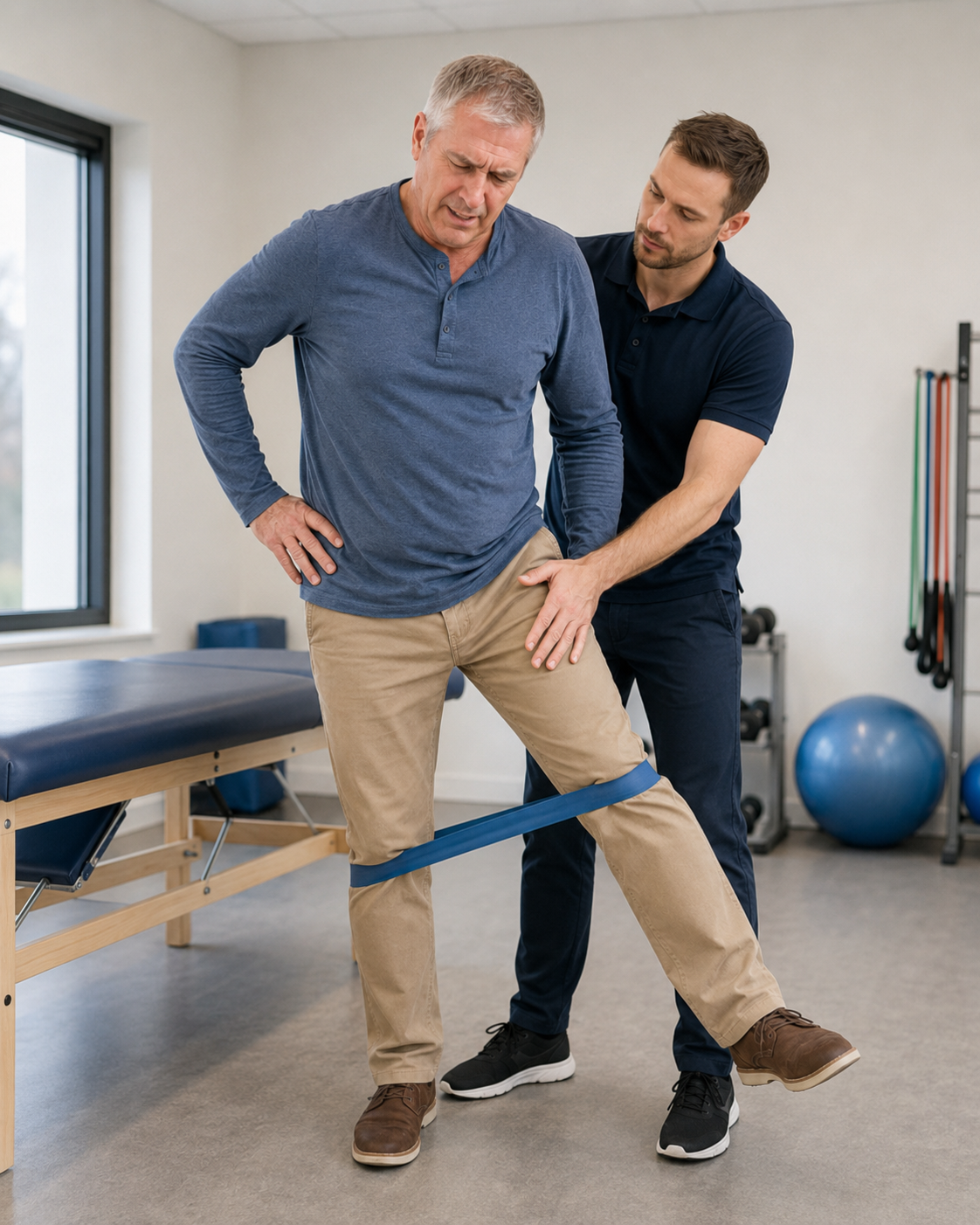
Hip Pain Physiotherapy in Brisbane.
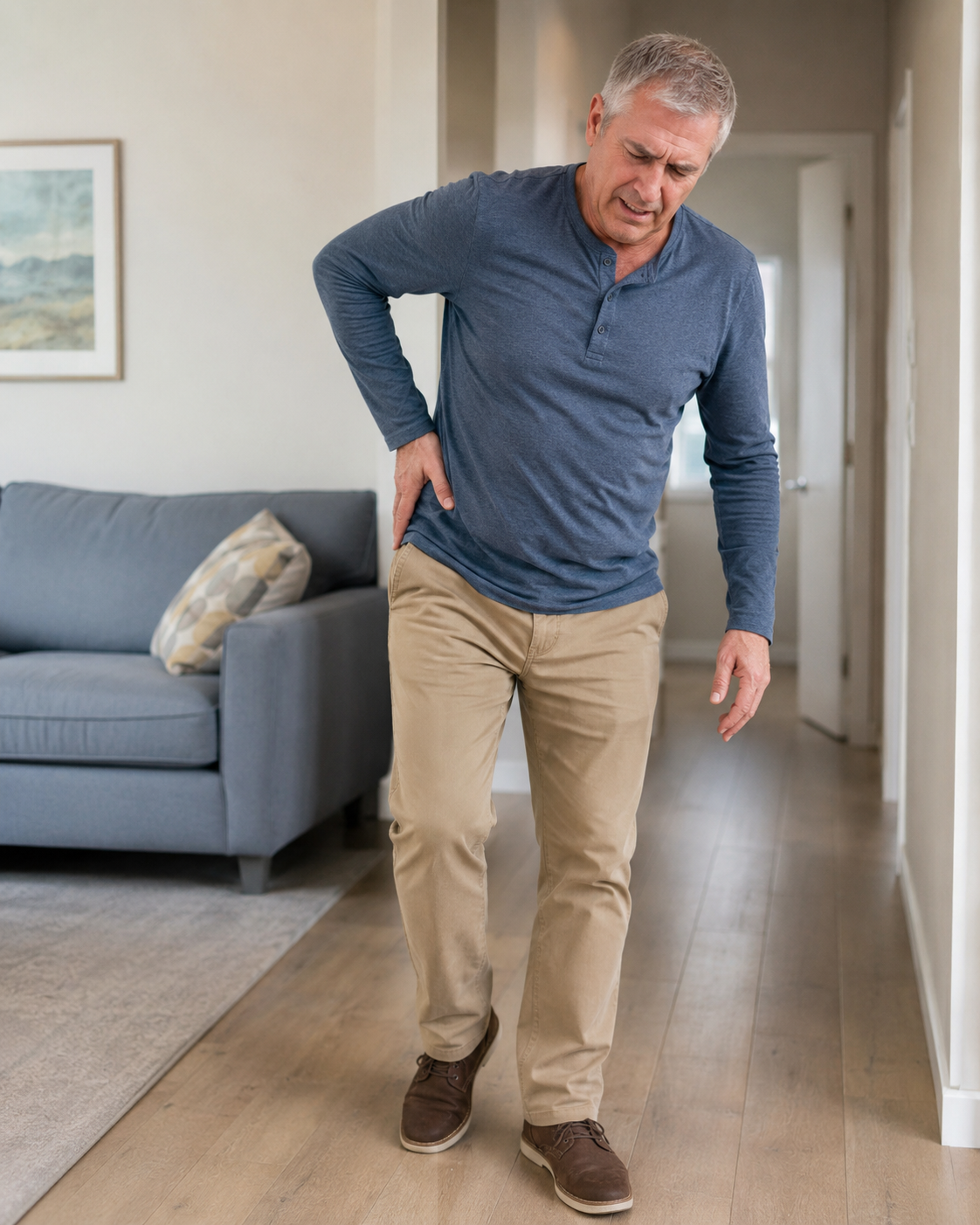
Hip pain is a common complaint that affects people of all ages — from young athletes with labral tears to older adults managing osteoarthritis. Because many structures refer pain into the hip region (including the lower back and pelvis), accurate diagnosis is essential before treatment begins.
At Moov Physio, we take a thorough, systematic approach to hip assessment to ensure you get the right diagnosis and the most effective treatment plan.
Common Causes of Hip Pain
| Condition | Features |
|---|---|
| Gluteal Tendinopathy | Outer hip pain; worse with walking, sitting cross-legged, or stairs |
| Trochanteric Bursitis | Lateral hip pain; often tender to touch; worsens lying on the hip |
| Hip Osteoarthritis | Groin or anterior hip pain; stiffness; reduced range of motion |
| Hip Labral Tear | Deep groin pain; clicking or locking; common in younger active adults |
| Femoroacetabular Impingement (FAI) | Groin pain with hip flexion; common in athletes and young adults |
| Iliotibial Band Syndrome | Lateral hip and thigh pain; runners and cyclists |
| Hip Flexor Strain | Anterior hip pain; worse with lifting the leg or running |
| Referred Pain from Lumbar Spine | Buttock, thigh, or hip pain from disc or joint problems in the back |
| Post-TKR/THR Rehabilitation | Recovery after total hip replacement surgery |
How We Treat Hip Pain
Manual therapy — Hip joint mobilisation, soft tissue release of the hip flexors, glutes, and ITB
Exercise rehabilitation — Progressive gluteal strengthening, hip stabiliser loading, and functional retraining
Shockwave therapy — For gluteal and trochanteric tendinopathies
Education — Activity modification, load management, positions to avoid
GLA:D Program — For hip osteoarthritis [View GLA:D →]
Post-surgical rehab — Structured hip replacement recovery program [View Post-Surgery Rehab →]
Frequently Asked Questions.
-
Gluteal tendinopathy (often misdiagnosed as bursitis) is the most common cause of lateral hip pain. It responds very well to physiotherapy including load management and progressive tendon loading exercises.
-
For many hip conditions, particularly gluteal tendinopathy and hip osteoarthritis, sustained hip adduction (crossing the legs, sitting with legs together) increases tendon load and should be avoided during the early treatment phase. Your physio will guide you.
-
For hip osteoarthritis, physiotherapy (especially the GLA:D program) often significantly reduces pain and improves function, potentially delaying or avoiding surgery. We’ll give you an honest assessment of what’s realistic for your situation.