Foot & Heel Pain Physiotherapy in Redlands.
Foot and heel pain can be surprisingly disabling — every step is a reminder. Whether it’s the sharp morning pain of plantar fasciitis, the aching Achilles of an overworked runner, or persistent ball-of-foot pain, Moov Physio’s Redlands team can diagnose and treat the full range of foot and heel conditions.
Foot & Heel Conditions We Treat
| Condition | Key Features |
|---|---|
| Plantar Fasciitis | Heel pain worst in the morning or after rest; sharp with first steps |
| Achilles Tendinopathy | Pain and stiffness at the back of the heel; worse with activity |
| Achilles Tendon Tear / Rupture | Sudden pop during activity; inability to push off |
| Heel Spur | Bony growth on the heel; often associated with plantar fasciitis |
| Posterior Tibial Tendon Dysfunction | Inner ankle pain and arch collapse; flatfoot |
| Peroneal Tendinopathy | Outer ankle pain; often after ankle sprain |
| Metatarsalgia | Ball-of-foot pain under the metatarsals |
| Morton's Neuroma | Sharp or burning pain between toes; numbness |
| Stress Fractures | Localised bone pain worsening with activity |

Our Approach to Foot & Heel Pain
Thorough biomechanical assessment — foot posture, walking pattern, footwear review
Manual therapy — joint mobilisation of the ankle, midfoot, and toes
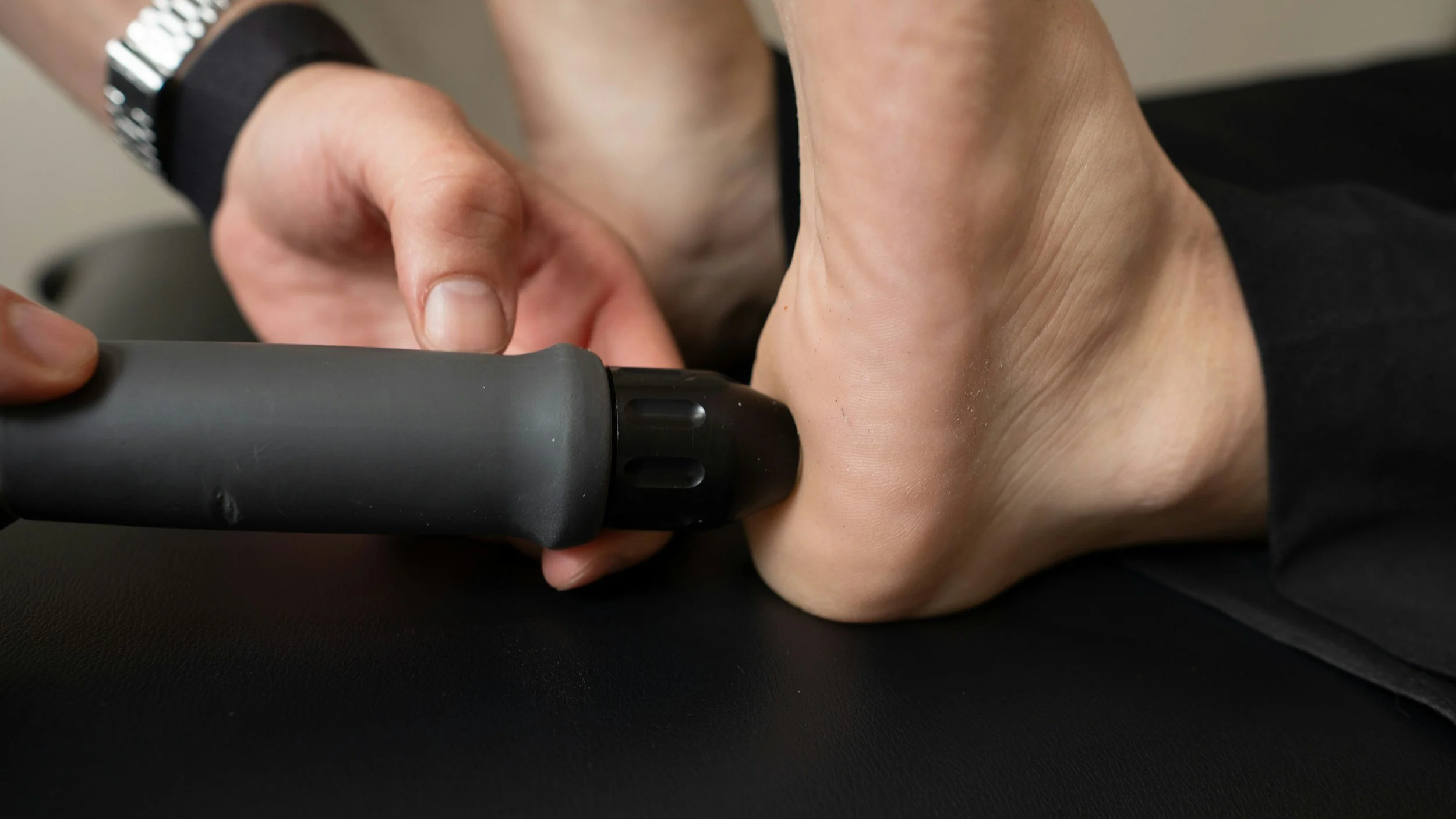
Shockwave therapy — highly effective for plantar fasciitis and Achilles tendinopathy [View Shockwave →]
Taping techniques — low-dye taping for plantar fascia offloading
Calf and foot strengthening — progressive tendon loading for Achilles and plantar fascia
Footwear advice — recommendations for appropriate support during recovery
Orthotic referral — referral to podiatry for custom orthotics when indicated
Plantar Fasciitis: Redlands’ Most Common Heel Condition
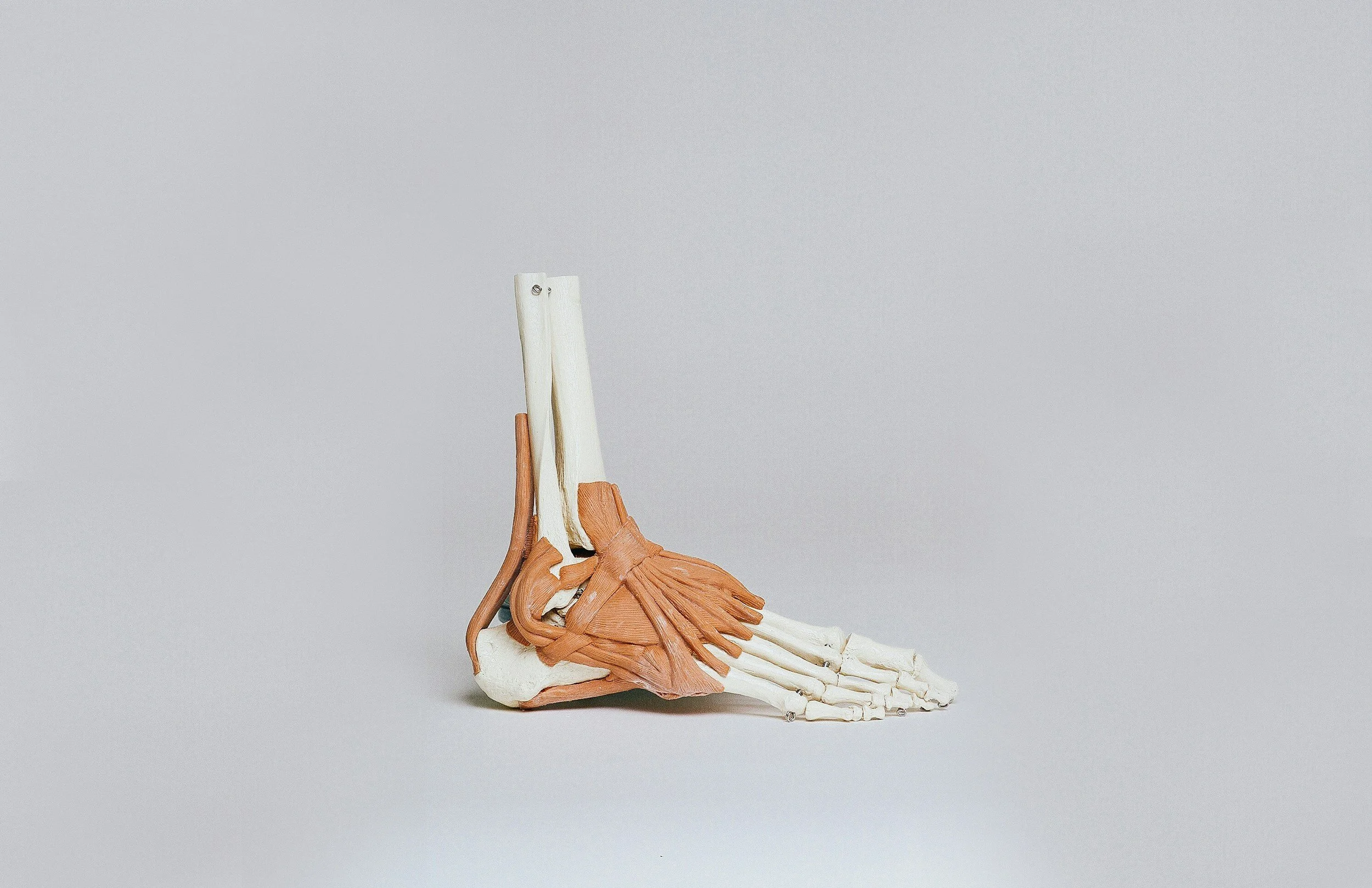
Plantar fasciitis is the most common cause of heel pain, affecting approximately 10% of people at some point in their lives. It involves degeneration and irritation of the plantar fascia — the thick band of tissue connecting the heel to the toes.
Classic presentation: Sharp pain on the inside of the heel, worst with the first steps in the morning or after sitting for a prolonged period, gradually easing after a few minutes of walking.
What works: Load management, calf stretching, progressive foot strengthening, and shockwave therapy for persistent cases. Most cases resolve within 3–6 months with appropriate physiotherapy.
Frequently Asked Questions.
-
With appropriate management, most cases improve within 3–6 months. Untreated or poorly managed cases can become chronic. Shockwave therapy significantly speeds recovery in stubborn cases.
-
Not necessarily. Load management — reducing volume and intensity while maintaining some activity — is usually better than complete rest. Your physiotherapist will help you find the right activity level.
-
Not always. Many cases resolve with physiotherapy and over-the-counter insoles. If biomechanical factors are significant, we’ll refer you to a podiatrist for orthotic assessment.