Elbow Pain Physiotherapy in Capalaba.
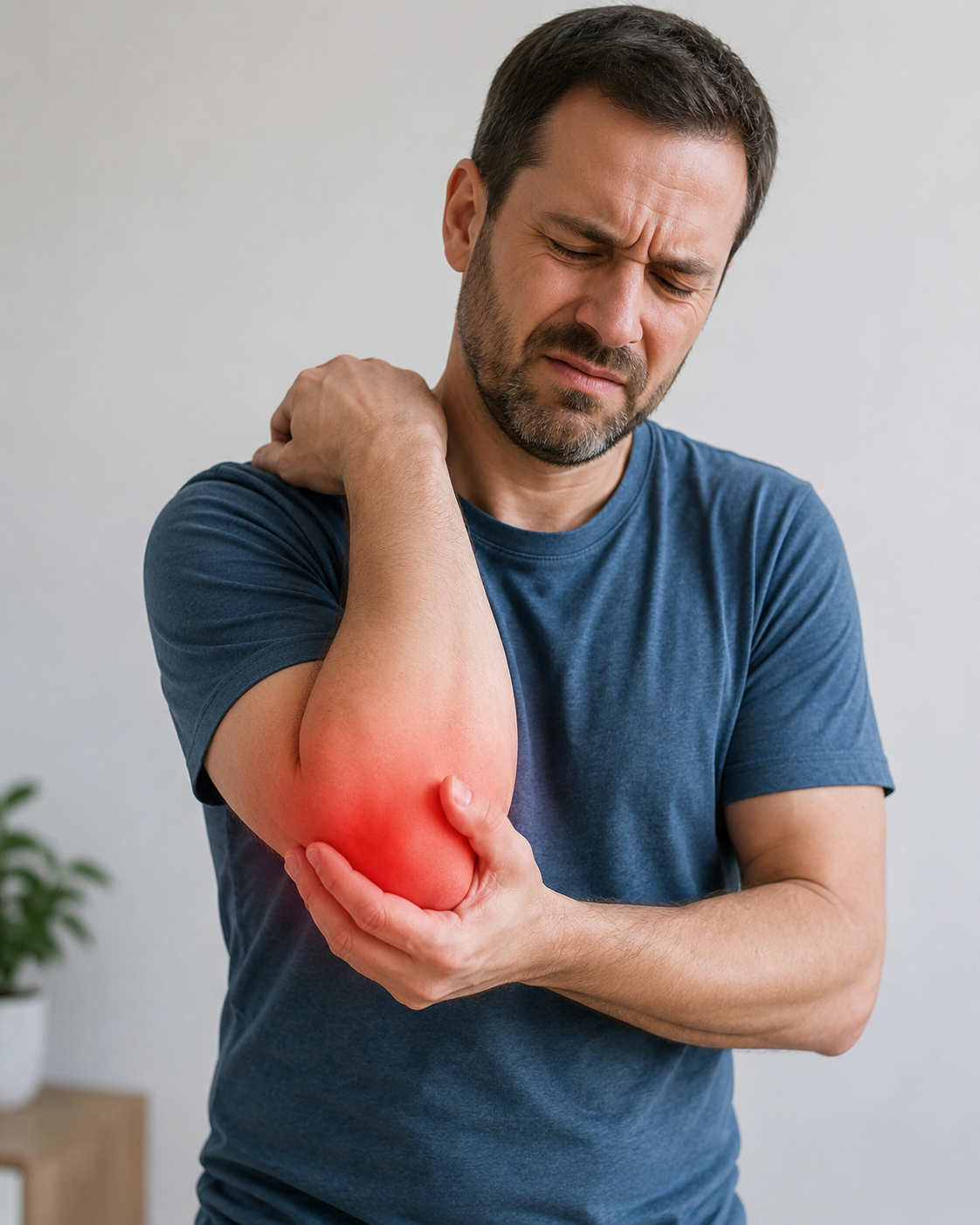
Elbow pain may seem like a minor complaint — until it stops you lifting a coffee cup, shaking hands, or working at a keyboard. The most common elbow conditions are highly responsive to physiotherapy, especially when treated correctly and early.
Elbow Conditions We Treat
Our physiotherapists assess and manage the full range of elbow injuries and pain presentations, from overuse tendon conditions to nerve-related symptoms.
| Condition | Features |
|---|---|
| Lateral Epicondylalgia (Tennis Elbow) | Pain on the outer elbow; gripping, lifting, and twisting aggravate it |
| Medial Epicondylalgia (Golfer's Elbow) | Pain on the inner elbow; wrist flexion and gripping are painful |
| Olecranon Bursitis | Swelling at the tip of the elbow |
| Cubital Tunnel Syndrome | Inner elbow pain with tingling into the ring and little finger |
| Distal Biceps Tendinopathy | Pain at the front of the elbow with forearm rotation |
| Elbow Ligament Sprains | After a fall or hyperextension |
| Referred Pain from the Neck | Cervical nerve root irritation referring into the elbow/forearm |

Tennis Elbow: Brisbane’s Most Common Elbow Condition
Despite the name, only 5% of tennis elbow cases are actually caused by playing tennis. It’s an overuse tendinopathy of the wrist extensor muscles — common in desk workers, tradespeople, and anyone doing repetitive gripping or wrist movements.
What works:
Progressive tendon loading exercises (the cornerstone of tendinopathy rehab)
Shockwave therapy for persistent cases [View Shockwave Therapy →]
Manual therapy to the lateral elbow and cervical spine
Temporary activity modification and ergonomic changes
Cortisone injections may reduce short-term pain but worsen long-term outcomes in tendinopathy — physiotherapy produces superior results at 1 year.
Our Treatment Approach
Load assessment — identifying the activities driving overload
Manual therapy — elbow, wrist, and cervical joint mobilisation
Progressive tendon loading — systematic exercise program
Shockwave therapy — for chronic, resistant cases
Ergonomic advice — keyboard setup, tool grip, workstation modifications
Neural mobilisation — if cervical nerve contribution is identified
Frequently Asked Questions.
-
With proper management: most cases improve within 4–8 weeks. Chronic cases (12+ months) may need longer, including shockwave therapy.
-
Not usually. Lateral epicondylalgia is a clinical diagnosis. Ultrasound may be useful to confirm tendon changes or rule out a tear in unclear cases.
-
A counterforce brace (just below the elbow) can reduce pain during activity by offloading the tendon. It’s a useful short-term tool but not a long-term solution — loading and rehab are key.