
Total Knee Replacement Rehabilitation.
Recovering from a total knee replacement takes more than rest — it takes the right exercises, at the right stage, guided by a physio who follows your surgeon's protocol. We support Capalaba patients from the first week home through to a confident return to daily life.
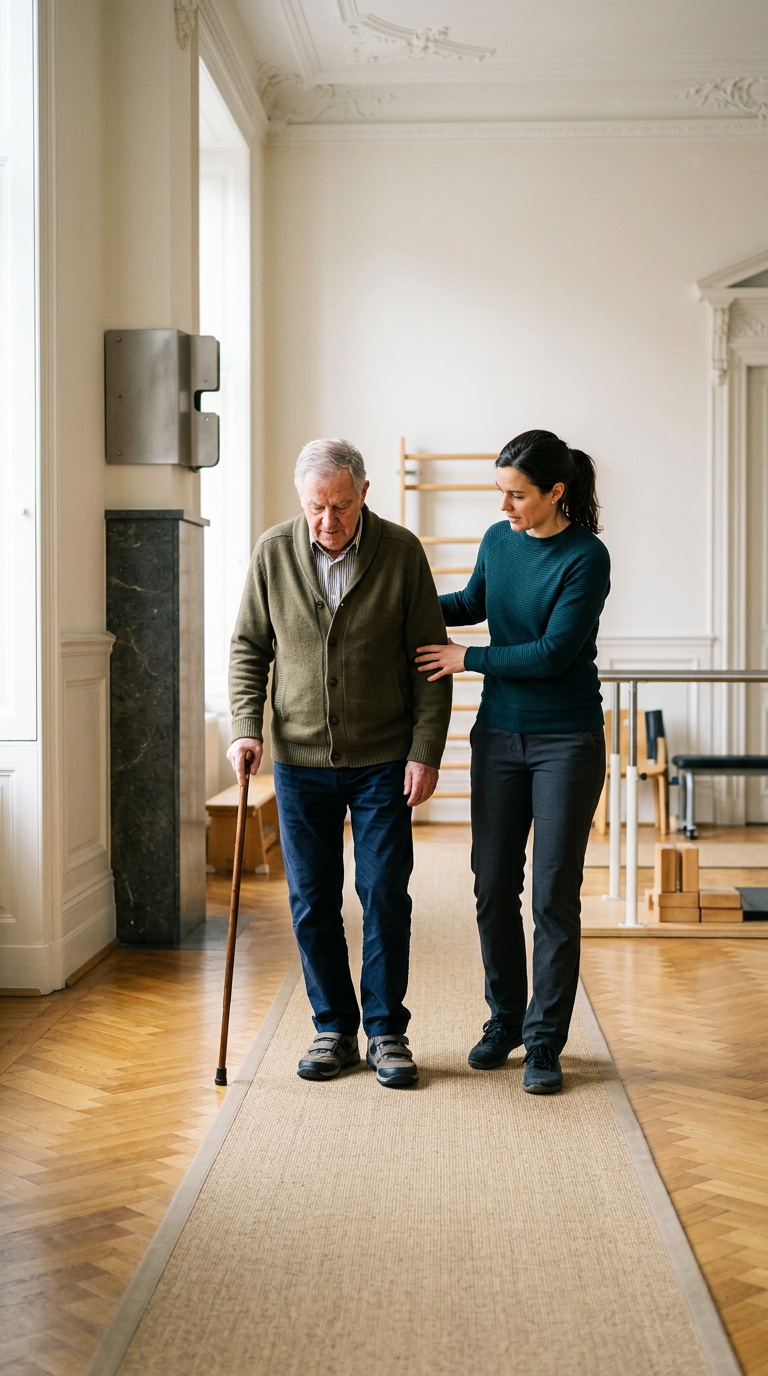

You Don't Have to Figure Out Recovery Alone
Over 53,000 Australians have a knee replacement for osteoarthritis each year, and most are walking independently within about three weeks with the right rehab behind them. Our program follows your surgeon's protocol from day one at home through to your return to walking, gardening or golf.
What Is Total Knee Replacement Rehabilitation?
A total knee replacement (TKR) resurfaces the worn ends of the thigh bone, shin bone and kneecap with an artificial joint, usually to treat advanced knee osteoarthritis. The surgery itself restores the joint — but regaining full movement, strength and confidence in it is the job of rehabilitation.
Structured physiotherapy after a TKR helps you regain range of motion before scar tissue restricts it, rebuild the quadriceps and hamstring strength that surgery temporarily weakens, retrain a normal walking pattern, and manage swelling and pain as you become more active. Skipping or rushing this process is one of the most common reasons people are left with stiffness or ongoing weakness months after surgery.
A General Recovery Timeline
Every recovery is different and your surgeon's protocol always takes priority — this is a general guide to what most patients experience.
| Stage | What's Typical | Physio Focus |
|---|---|---|
| Day 1–3 (in hospital) | Standing and taking first steps with a frame or crutches, usually the same or next day | Safe transfers, early walking, ankle pumps, swelling management |
| Week 1–3 | Walking with a cane or unassisted for many patients; daily tasks become easier | Gait retraining, regaining full knee extension, gentle strengthening, wound and swelling care |
| Week 4–6 | Reduced pain, improved confidence on stairs and uneven ground | Progressive strengthening, balance work, bending range of motion |
| Week 6–12 | Return to most light daily activities and short walks | Functional strength, endurance, tailored return-to-activity planning |
| 12 weeks+ | Return to low-impact activities such as golf, cycling, dancing and gardening for most patients | Ongoing conditioning, addressing any residual stiffness or weakness |
What to Expect From Your Rehab Program
Frequently Asked Questions
When should I start physiotherapy after a total knee replacement?
Most patients begin physiotherapy the same day or the day after surgery, while still in hospital. Early movement is one of the strongest predictors of a smooth recovery, so outpatient or home-based sessions should ideally start within the first one to two weeks after discharge.
How long does it take to recover from a total knee replacement?
Most people are walking with a cane or unassisted within about three weeks, and return to low-impact activities like golf, dancing or cycling by around 12 weeks. Full recovery, including strength and confidence, can continue to improve for up to a year.
Can a physiotherapist visit me at home after knee replacement surgery?
Yes. We offer home visits across Greater Brisbane and South-East Queensland in the early weeks after surgery, when travel is difficult, and can transition you to our Capalaba clinic once you're mobile.
What exercises help most after a total knee replacement?
The most important early exercises are those that restore full knee extension and bending range, alongside quadriceps and hamstring strengthening. A physio-supervised program tailors the exercises and progression to your surgery and healing stage rather than a generic sheet.
Is physiotherapy covered by Medicare or private health after knee replacement surgery?
Physiotherapy after a TKR can be accessed via a Medicare Enhanced Primary Care (EPC) referral, DVA (with a DVA904 GP referral), WorkCover where applicable, or private health insurance extras. Ask our team which pathway applies to you.
Ready to Start Your Recovery?
Whether you're preparing for surgery or already home and ready to begin rehab, our Capalaba team can build a program around your surgeon's protocol.